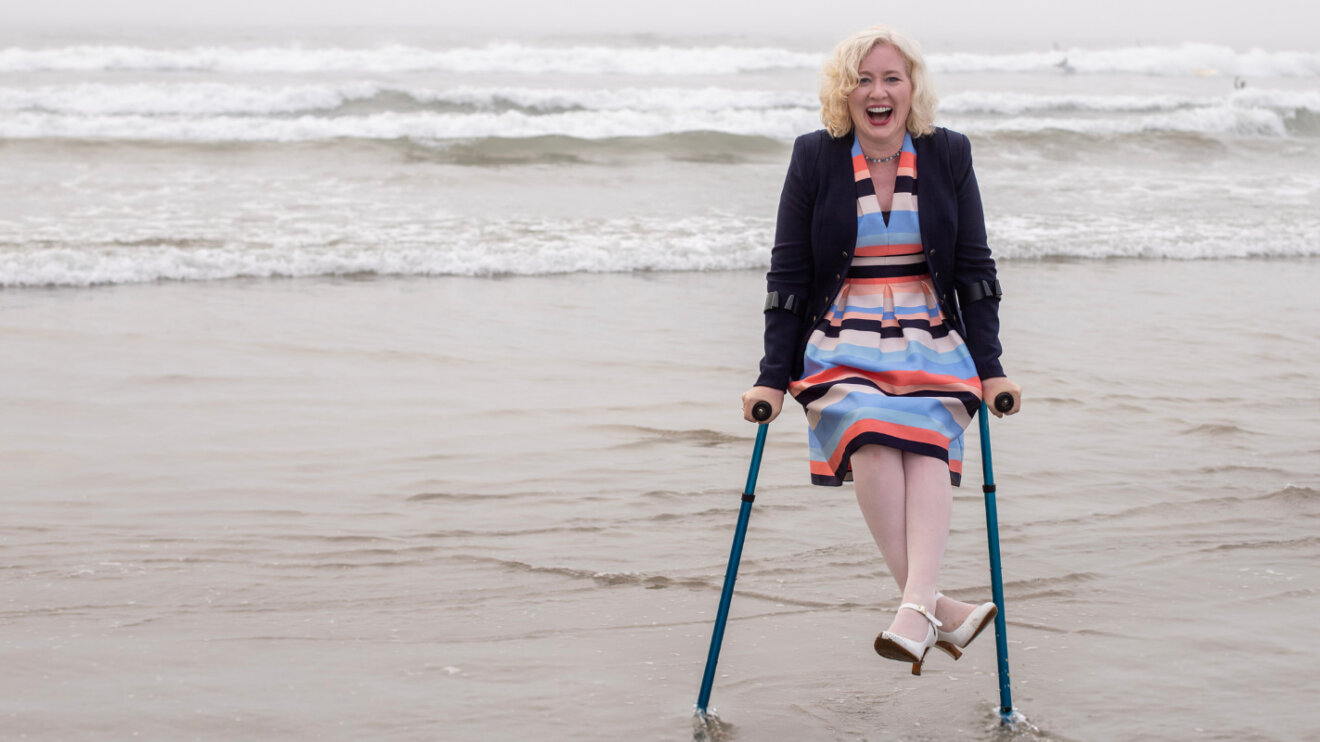

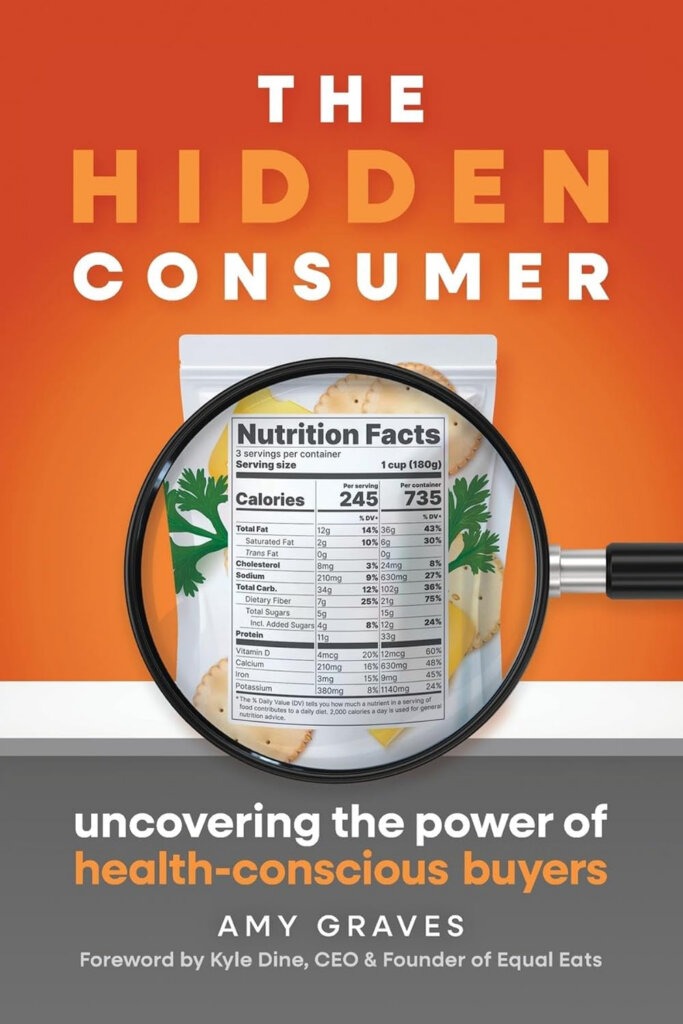
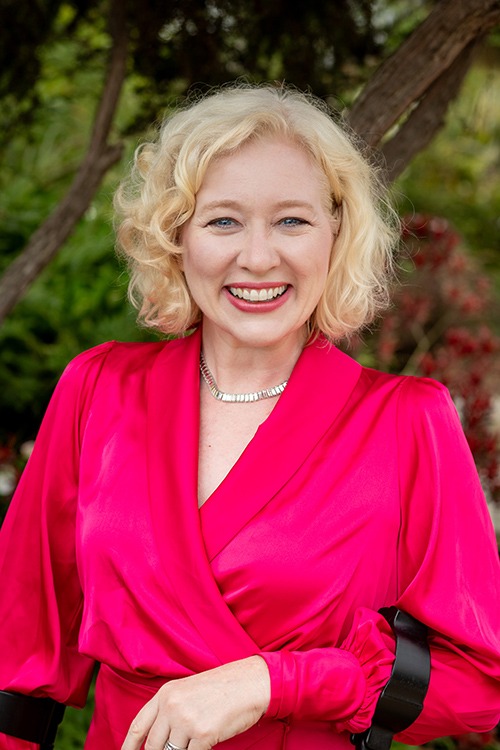
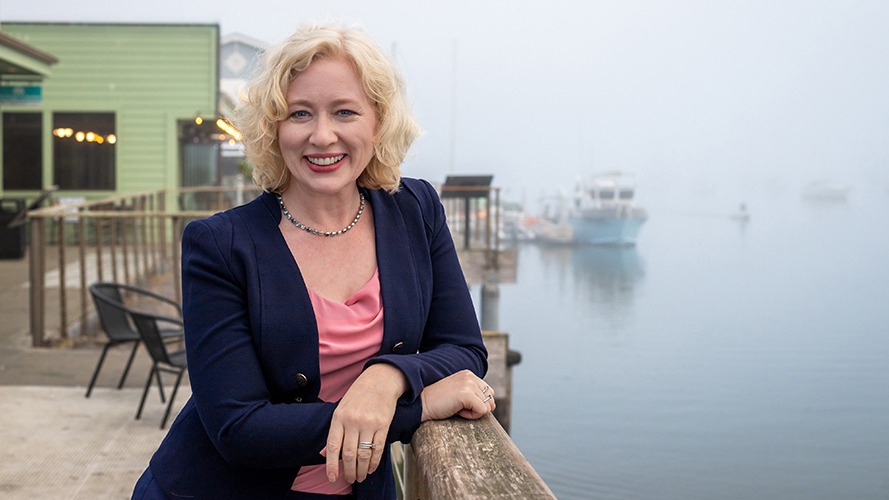
Amy M. Graves is the founder, chief advocate and chief strategist of Hidden Consumers Consulting, a business that helps food and beverage companies reach a wider audience by including ‘hidden consumers’ who closely read nutrition labels. Graves, who lives with a severe corn allergy, uses research and her lived experience to advocate for others like her—and unlock new customers for food and beverage companies. She is also the author of The Hidden Consumer: Uncovering the Power of Health-Conscious Buyers.
Find Amy M. Graves on Instagram and LinkedIn, Hidden Consumers Consulting on Facebook, Instagram, YouTube and LinkedIn and The Hidden Consumer book on Facebook.
What inspired you to start your business?
My own journey with health and allergies.
In 2000, I began connecting my illnesses to food. Yet for more than a decade, every allergist told me I was fine and “just needed to lose a few pounds”. My symptoms dismissed while my health continued to decline. It wasn’t until 2013, when an MRI revealed a lump in my sinus cavity, that a doctor finally considered whether I had severe allergies.
I am one of the millions of people with an allergy the government doesn’t recognize. I am extremely sensitive to corn and corn derivatives—which is why no allergy test could ever pinpoint my food issues.
As a trained historian, I turned to peer-reviewed research to understand what was happening to me and to others like me. The statistics were staggering. The British Medical Journal published an umbrella review of 248 studies covering roughly 10 million people, concluding that 71 percent of health conditions today are driven by the food we eat—both processed and ultra-processed.
That study sparked my desire to help others.
Tell us about yourself and your business—what makes it one of a kind?
I am one of a growing number of consumers who struggle to find safe food. In the United States, we’re seeing a significant rise in food sensitivities and allergies. Yet the government recognizes only a small percentage of allergens, leaving millions of people struggling to understand why basic foods leave them sick—or worse, in the hospital.
I made the decision to turn my obstacles into a business. Rather than coaching individual consumers, I chose to work at the food and beverage industry level. My company helps the C-suite understand why their marketing dashboard is green while their finance department is showing yellow or red—and it all starts with a conversation. Through consulting engagements, label and ingredient audits and executive workshops, I uncover where companies are losing their most loyal customers without even knowing it.
Consumers who read every label are among the most loyal customers a brand can have. The long-term value they provide is worth its weight in gold and directly benefits a company’s ROI. In today’s world of hype marketing, buyers typically stick with a brand for only about 90 days before jumping to the next hyped product. Through marketing transparency, I help businesses understand the value of reaching the Hidden Consumer.
What was the first step to starting your business?
Making the decision is always the first step.
My family had moved to California because I could no longer safely buy food in a grocery store. I needed access to year-round organic farmers’ markets just to feed myself. Yet I still struggled to find employment, even after earning my certificate in Business Analysis from UC Davis. At that point, I said, “It’s time to become a consultant.” It was an idea I had toyed with for almost two decades.
How do you differentiate your company from other similar offerings?
My starting point is different.
Most food industry consultants come from inside the industry, marketing, food science or supply chain backgrounds. I come from the other side of the label. I’m one of the consumers their dashboards can’t see.
I lived the problem for years before I studied it. As a trained historian, I then approached it with peer-reviewed research, not anecdotes. That combination of personal experience backed by academic rigor means I don’t guess at why label-reading consumers behave the way they do. I know, and I can prove it.
Where traditional market research treats highly sensitive consumers as edge cases to be filtered out of the data, I treat them as the most valuable signal in it. They’re the canaries in the coal mine—the first to detect a trust problem, the first to reward a brand that fixes it and the last to leave once they’ve committed.
Finally, my work speaks directly to the bottom line. I don’t sell transparency as a values statement or a PR initiative. I show the C-suite why their marketing dashboard is green while their finance dashboard runs yellow or red—and how closing that gap converts the Hidden Consumer into their most loyal customer base.
In short: most consultants ask how to sell more food. I ask what the customer who reads every label already knows and how much it’s costing you to ignore them.
What’s one mistake you made early on in your business, and what did you learn from it?
I’ve made plenty of mistakes in business, but my biggest one was letting go of my vision.
After my book was published in September 2025, I was drawn into working with consumers directly. It wasn’t my calling. It took months of feeling like I was swimming upstream to realize I had drifted so far off my path. My work with consumers needs to be indirect—reaching them through the industry, not one-on-one.
When I finally recognized it, I went back to my book. I pulled out my framework and started creating transparency audits of major brands. That’s how my Wednesday livestreams—the Hidden Consumer Transparency Audit—were born.
The lesson? A vision isn’t something you set once and forget. It has to be checked against reality regularly. Sometimes your biggest mistake isn’t what you did. It’s not noticing soon enough that you’ve stopped doing what you were meant to do.
Describe your company in three words.
- Transparent
- Trailblazer
- Trust-driven
What excites you about your work?
Finally feeling like I am doing what I was meant to do. The ability to work within the industry and have a positive impact on the consumer and their families.
What’s your proudest business milestone so far?
My first Hidden Consumer Transparency Audit reached 5,000 views on LinkedIn alone. It also reached the eyes of the C-suite for the brand.
Who’s a female entrepreneur that inspires you?
Dolly Parton. She owned who she was, made it a brand and still helped others.
What’s a business myth you’d love to bust?
“Transparency costs money.”
Conventional wisdom says transparency is a compliance expense. Basically, a cost center. My argument is the opposite. Label-readers are the most loyal, highest-LTV customers and brands lose them invisibly. Transparency makes money; opacity quietly bleeds it.
What advice would you give to other female entrepreneurs?
First, stay true to your vision. Your process may not match the advice you are given and that’s okay. Second, take the time work on your messaging by talking to others. Find your ideal client, listen to how they discuss the problem you want to help them solve. You have to use their language and descriptions to make the connection.
Anything else you want to share with our audience?
Thank you to Lioness for the opportunity to share my story.
Interested in your own feature? Join Lioness Premium today! As a member, you can share your story, showcase your expertise and inspire fellow female entrepreneurs through our exclusive feature series.




Add Comment