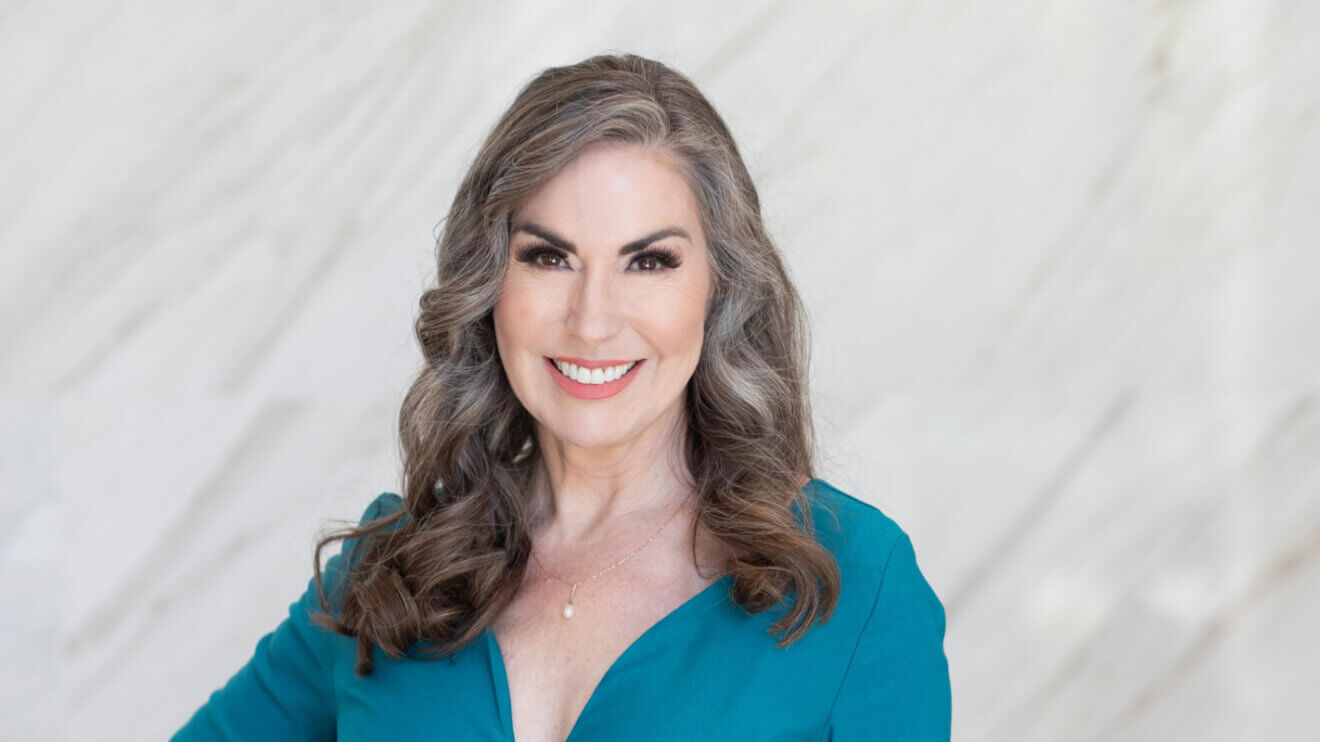

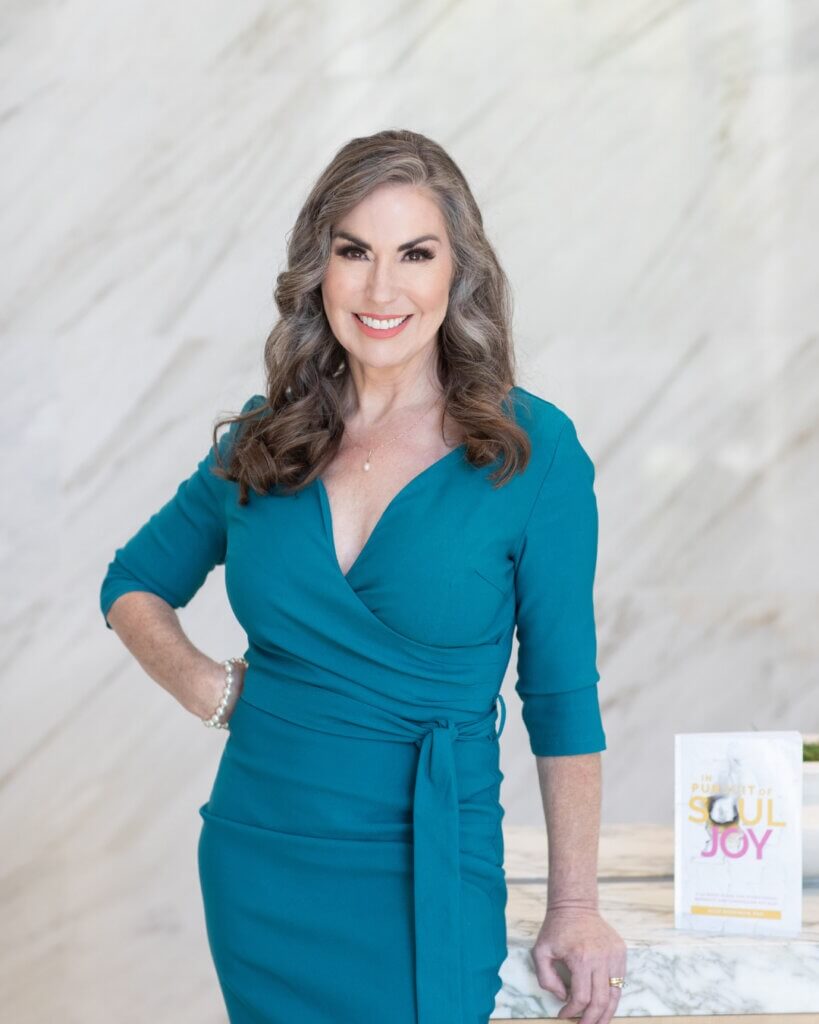
With more than 30 years of experience in mental health, Julie Merriman, PhD, has dedicated her career to helping individuals navigate life’s emotional and psychological challenges. A licensed clinical counselor and professor, she has directed psychiatric units, managed community mental health centers and currently leads a graduate counseling program. She brings this experience to her business coaching women whose nervous systems have been on overload for decades.
Tell us about yourself and your business—what makes it one of a kind?
I am a licensed clinical counselor and professor with 30 years of practice behind me. I have run psychiatric units and community mental health centers, and I still lead a graduate counseling program. So when I tell a woman that what she is feeling has a physiological cause, I am not guessing. I have watched it in a thousand rooms.
Sexy After 50 came out of one sentence I kept hearing: “I don’t feel like myself anymore.” These were capable, accomplished women who loved their partners and dreaded intimacy. Every one of them assumed something was wrong with her. It isn’t. What she lost was not her femininity. It was access to herself because her nervous system had been carrying too much for too long.
Here is what makes the work one of a kind. Most of this industry treats midlife desire as a hormone problem or a bedroom-tips problem. I treat it as a safety problem. A body in protection mode does not prioritize pleasure. Des1Qire did not disappear; it went underground, and underground things can come back up. That is the whole premise: tamed, not broken™. Neuroscience and soul in the same breath. Clinical authority and permission in the same room. I am a clinician, not a bedroom coach.
What inspired you to start your business?
The women who kept telling me they were failing at womanhood when the truth was they were exhausted. Successful in every measurable way, depleted in every way that matters and blaming themselves for a body that had simply stopped feeling safe enough to soften. I realized I was watching the same pattern over and over, and there was no language for it. Nobody was telling these women that their flatness was a capacity problem, not a character flaw. So I decided to build the language, the framework, and the roadmap myself, because if I didn’t say it plainly, they were going to keep walking around certain they had expired.
What was the first step to starting your business?
I wrote the thing down. Before there was a program or an offer or a single follower, I named what I was seeing and put it in a book, Are We Gonna Have Sex or What? Writing forced me to turn 30 years of clinical instinct into an actual framework a woman could follow on her own, from reclaiming permission all the way to feeling alive in her own body again. Then I started the podcast and just kept talking to the audience directly, week after week, until I understood exactly who I was building for.
Who’s a female entrepreneur that inspires you?
Brené Brown. She took rigorous research on something most people were too uncomfortable to discussdiscuss— shame—andand built an entire body of work around it without ever softening the science into something cute. That is exactly the line I try to walk: real clinical authority on a subject the culture would rather whisper about.
What’s a business myth you’d love to bust?
That you have to show up as the polished expert with every answer before anyone will trust you. My data says the opposite. The content that pulled the most reach for me was not the stuff where I stood on authority and named my proprietary frameworks. It was the stuff where I was the learner, honest and a little unfinished, working it out alongside my audience. Clinical authority earns you followers. Witnessed humanity earns you the shares that actually grow the thing. Being a real person in public is not a gap in your brand. It is the strategy.
What’s one mistake you made early on in your business, and what did you learn from it?
I said yes to everything. In my first stretch I did more than 50 guest appearances and interviews in 4 months, chasing visibility like reach was the same thing as revenue. It is not. Fifty rooms with no clear path for anyone to actually work with me afterward is just noise, and it burned time I could not get back. What I learned: build the path to purchase before you chase the audience, and then get ruthlessly selective about where you spend your energy. Volume is not a strategy. I would rather be in three rooms that convert than thirty that flatter my ego.
Describe your company in three words.
Neuroscience, soul, permission.
What’s your proudest business milestone so far?
Publishing Are We Gonna Have Sex or What? It is my second book, and it is the one that turned a career’s worth of clinical observation into a framework women can actually hold in their hands. Every reader who finishes it writes back to say some version of “I thought it was just me.” That is the milestone. Not a number, a recognition.
What excites you about your work?
The flicker. There is a specific moment when a woman hears that her flatness is her nervous system in protection mode and not evidence that she is done, and something behind her eyes comes back online. That recognition, that quiet “wait, this is me,” is her system beginning to trust that it is safe to feel again. I get to witness that for a living. Nothing beats it.
How do you differentiate your company from other similar offerings?
Other people in this space hand women a hormone patch, a supplement, or a list of tips to spice things up, all of which assume the body is the problem. I start from the opposite premise. The body works fine; the conditions around it stopped feeling safe. Research on women with arousal disorders actually shows their bodies respond physiologically even when they report feeling nothing, which tells you desire is a safety and nervous-system question long before it is a hormone question. So I do not try to override the body. I help a woman regulate her nervous system so pleasure is allowed back in. That reframe, tamed rather than broken, is the whole differentiator, and I am not aware of anyone else building it with clinical rigor.
What advice would you give to other female entrepreneurs?
First, do not build your business on land you do not own. Rented platforms and other people’s tech stacks will hold your audience hostage. Own your email list, own your content, own the relationship. When I got clear on that, it changed how I spent every dollar. Second, measure the right signal. Likes tell you the work resonated with people who already like you. Shares tell you it traveled to someone new. If you are trying to grow, track the metric that acquires, not the one that flatters. I watch shares and non-follower reach, not vanity likes. Third, build your checklist before you delegate. I handed off production before I had my own verification system in place, and things fell through the cracks. Systematize the standard first, then bring in help to run it. A great team cannot fix a process you never wrote down.
Anything else you want to share with our audience?
If any of this landed for you personally, start with the book, Are We Gonna Have Sex or What? It is the full roadmap, and the free Desire Reset Guide that comes with it is the fastest way to move from that flicker of recognition into an actual shift. You are not past your prime and you have not expired. You were tamed by decades of putting everyone else’s oxygen mask on first. Desire did not leave; it went underground waiting for safety. Bringing it back is not selfish. It is the most courageous thing a woman in midlife can do.
Interested in your own feature? Join Lioness Premium today! As a member, you can share your story, showcase your expertise and inspire fellow female entrepreneurs through our exclusive feature series.





Add Comment